If you’ve ever experienced a Charley (or Charlie) horse, you can vouch they are not pleasant experiences. They do, however, have kind of a funny name. And some say the etymology of that funny name is rooted in baseball.
A popular story revolves around a pitcher named Charley Esper. At the beginning of the twentieth century, groundskeepers often brought in old and lame horses to pull the equipment used to keep the playing field in good condition. Charley Esper of the Baltimore Orioles walked with a bit of a limp, the result of years of injuries. Because his limp reminded his teammates of the groundskeeper’s lame horse, they called Esper “Charley Horse.”
A different origin story also involves the Orioles organization. Several players had gone to the racetrack and backed a horse named “Charlie.” Unfortunately, Charlie ultimately pulled up lame and lost the race. The next day, when one player pulled a tendon in his leg, his teammates likened him to “our old Charlie horse.”
As for the actual, true origins of the term, nobody knows for sure. A number of stories, even beyond these, seem to relate to baseball and/or the racetrack, which makes sense since these were the primary American pastimes from the 1880s into the twentieth century.
A lot of people think I had such a rosy career, but I wanted to identify that one of the things that helps you have a long career is learning how to deal with adversity, how to get past it. Once I learned how to get through that, other things didn’t seem so hard.
Some consider Lefty Grove to be baseball’s greatest pitcher of all time — or, at the very least, the greatest left-handed pitcher of all time.
Robert Moses Grove was born to John and Emma Grove on Tuesday, March 6, 1900 in Lonaconing, Maryland. Following in the footsteps of his father and older brothers, Grove initially began a career working in the mines. He quit after two weeks, however, declaring, “Dad, I didn’t put that coal in here, and I hope I don’t have to take no more of her out.” From there, he drifted between other forms of work, including a “bobbin boy” working spinning spools to make silk thread, as an apprentice glass blower and needle etcher in a glass factory, and as a railroad worker laying rails and driving spikes.
When he was not working, Grove played a version of baseball using cork stoppers in wool socks wrapped in black tape as a ball, and fence pickets when bats were not available. He did not play an actual game of baseball until the age of seventeen, nor did he play organized baseball until nineteen when Dick Stakem, the proprietor of a general store in a neighboring town, recruited him to play in town games on a field located between a forest and train tracks.
Grove put on such a good performance as a pitcher, the manager of the B&O railroad wanted the teenager on his team, and hired him to clean cylinder heads of steam engines in Cumberland, Maryland. Grover never got the opportunity to play baseball with B&O, however. A local garage manager named Bill Louden also happened to manage the Martinsburg, West Virginia team of the Class D Blue Ridge League and offered Grove an astonishing $125 a month, a sum $50 more than his father and brothers were making.
Grove took a 30-day leave from his job, going 3-3 with 60 strikeouts in 59 innings for the Martinsburg team. Word of Grove’s performance reached Jack Dunn, owner of the International League (Double-A) Baltimore Orioles, and Dunn proceeded to buy Grove for a price somewhere between $3,000 and $3,500 from Louden.
Grove won his debut, 9-3, over Jersey City, prompting Dunn to say he wouldn’t sell Lefty to anyone for $10,000. From 1920-24, Grove was 108-36 and struck out 1,108 batters for a minor-league record. Grove was often wild as well, however, and went 3-8 in the postseason. His final season in Baltimore, however, he went 26-6, struck out 231 batters in 236 innings, and reduced his walks from 186 to 108. Following the 1924 season, Dunn sold Grove to Philadelphia owner and manager Connie Mack, for $100,600. The extra $600 supposedly made it a higher price than the Yankees had paid the Red Sox for Babe Ruth after the 1919 season.
Grove was twenty-five years old when he broke into the big leagues on April 14, 1925 with the Philadelphia Athletics. He had a rough rookie season, going 10-12 and leading the American League in both walks (131) and strikeouts (116). “Catching him was like catching bullets from a rifleman with bad aim,” Athletics catcher Mickey Cochrane commented years later.
In 1926, Grove’s ERA dropped from it’s previous 4.75 to a league-leading 2.51, his walks dropped from 131 to 101, and his strikeouts increased from 116 to 194. However, Grove also didn’t receive much support, and he was shut out four times in the season’s first two months. He would finish the season with a 13-13 record.
His bad fortune would not last forever, though. Grove led the league in strikeouts the next five years and won twenty or more games for the next seven. In 1929, the A’s won the pennant. Connie Mack declined to start either Grove or Rube Walberg, another left-handed pitcher, in the World Series, but Grove made his mark in relief. Coming into Game Two in the fifth inning, he recorded six strikeouts, three hits, one walk and no runs allowed over 4 1/3 innings. Grove then pitched the last two innings of Game Four in relief as well. The A’s took the Series, four games to one over the Cubs, and Grove struck out ten batters in 6 1/3 innings.
In 1930, A’s went 102-52 to finish in first place, and Grove won the Triple Crown of pitching by leading the league in wins (28), strikeouts (209), and ERA (2.54). In the World Series, the A’s faced the St. Louis Cardinals, who had batted .314 as a team for the season. Grove won the opener, 5-2, throwing seventy strikes and a mere thirty-nine balls, striking out five and allowing nine hits. Grove then relieved George Earnshaw in the eighth inning of a scoreless Game Five and won it, 2-0, with the help of Jimmie Foxx’s two-run homer.
Grove finished the 1931 season 31-4 with an ERA of 2.06. He won his second straight Triple Crown with 175 strikeouts and was named the American League’s Most Valuable Player. The Athletics won the pennant again, finishing 13 1/2 games ahead of second-place New York. With a blister on one of his throwing fingers, Grove gave up twelve hits in the World Series opener, but he received good fielding support and won, 6-2. However, Grove allowed eleven hits and four earned runs in eight innings during Game Three, losing 5-2. Grove then won Game Five, 8-1, on five hits and one walk. However, the A’s lost the Series in seven games to the Cardinals.
Grove had a 24-8 record in 1932 and led the league with a .750 percentage and 21 complete games. In 1933, he finished 24-8 with a 3.20 ERA — the first time since 1927 that he finished the season with an ERA above 3.0. Following the 1933 season, facing the financial realities that came with the Great Depression, Connie Mack traded Grove to the Boston Red Sox.
Unfortunately, Grove was unable to contribute much during his first year in Boston, as an arm injury held him to an 8-8 record. He bounced back in 1935, however, finishing 20-12 with a league-leading 2.70 ERA. In the 1936 season, he pitched a 2.81 ERA to win his seventh ERA title while posting a 17-12 record and 130 strike-outs. He then won his eighth ERA title a year later, finishing with a 17-9 record and 153 strike-outs. Grove then finished with records of 14-4 in 1938 and 15-4 in 1939, but in 1940, he had a 7-6 record while recording a 3.99 ERA with 62 strike-outs. The 1941 season would be his final season, and he finished 7-7, winning his 300th game on July 25th.
Grove finished with a career record of 300-141, and his .680 lifetime winning percentage is eighth all-time. He was elected to the National Baseball Hall of Fame in 1947, his first year of eligibility.
Lefty Grove died in Norwalk, Ohio, on May 22, 1975 at the age of seventy-five and was buried in the Frostburg Memorial Cemetery in Frostburg, Maryland.
Orioles infielder Cal Ripken, Jr. was awarded the American League Rookie of the Year on November 24, 1982. Ripken’s consecutive game streak had already begun at this point, sitting at 118 games at this point.
On August 22, 2007, the Texas Rangers became the first major league team in over a century to score thirty runs in a game. The Rangers defeated the Baltimore Orioles, 30-3, setting a club record with 29 hits in the game. This match was the first of a doubleheader, and the Rangers also won the second game, 9-7.
Orioles pitcher Jim Palmer, aged nineteen, made his Major League debut on May 16, 1965 when he came on in relief to pitch 3.2 innings. The O’s defeated the Yankees, 7-2, and Palmer recorded his first major league win. To top it all off, Palmer also managed to hit a two-run home run off Yankees starting pitcher Jim Bouton in the fourth inning. Palmer would finish the season with a 5-4 record.
Someone (unknown) once commented, “Baseball is an island of activity amidst a sea of statistics.” There’s no doubt statistics drive the game. Here’s a good general timeline on how that has played out over the years.
On March 10, 1966, the Baltimore Orioles traded minor league outfielder Lou Piniella to the Cleveland Indians for reserve catcher Camilo Carreon. Carreon would only play in four games for the Orioles, then retired at the end of the season. Piniella only played in six games for the Indians, but then went on to appear in more than 1,700 major league games.
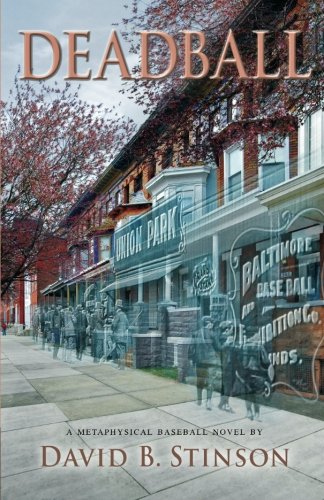
This weekend I finished reading Deadball: A Metaphysical Baseball Novel by David B. Stinson. I stumbled upon this book accidentally, actually while looking for another book (I can no longer recall which) about the Dead Ball Era. Stinson’s novel is not about the era — not really, anyways. Rather, this novel is somewhat Field of Dreams-esque in that the book’s main character finds himself seeing the ghosts of long gone ballplayers and sometimes even the old ballparks they used to play in, but which have long since been abandoned or torn down.
The protagonist of this novel is one Byron Bennett, a.k.a. “Bitty,” though he despises the nickname. Byron is a former minor league ballplayer who never made it past the AAA level, but continues to stay obsessed with baseball and with baseball history. As a kid, Byron once saw the deceased Babe Ruth hit a home run at a local ballpark. Upon crossing home plate, Ruth winked at Byron, then disappeared. Byron’s parents and friends dismissed the experience as Byron’s imagination. Years later, Byron now finds himself having additional, similar experiences.
The year is now 1999, and Byron works for the minor league Bowie Baysox, an affiliate of his favorite MLB team, the Baltimore Orioles. In his spare time, Byron not only goes to Orioles games, he also steeps himself in baseball history. 1999 represents the final year for baseball in Detroit’s Tiger Stadium, and with that in mind, Byron decides to travel to Detroit for the Orioles’ final series in that stadium. He meets an older gentleman who calls himself Mac, though Byron suspects there is more to Mac than meets the eye. For one thing, the bar where Byron meets Mac has been shut down and boarded up for years, as confirmed by the locals, though it certainly didn’t appear that way when Byron first came across it.
Byron’s road trip brings him not only to Detroit, but he also stops at the former site of Forbes Field, and he stops in Cleveland on his return trip. Byron comes across a number of other characters, all who, like Mac, don’t seem like your normal, everyday humans-on-the-street. Byron goes on various road trips throughout the season, visiting old ballpark sites in New York and Boston, and even stopping in graveyards to pay his respects to old ballplayers. On his travels, Byron carries with him a copy of Lawrence Ritter’s Lost Ballparks, which he references whenever he finds himself in the presence of one of the old time baseball fields. On occasion, the ballparks seem to come alive in his presence, and he starts to look forward to the occurrence. Byron also has an encyclopedic familiarity with old ballplayers, and he is stunned to realize that the strange gentlemen he is meeting in his travels are all former, and now-deceased, ballplayers.
Byron’s friends, boss, and ex-wife are all concerned about him, of course. They tell him it is time to stop living in the past and to let go of baseball so he can move on with his life. The word “crazy” is thrown around liberally, and Byron sometimes even wonders himself. He doesn’t understand how it is he is seeing these things, nor why. In addition to the ghosts he comes across, Byron also meets a man named Peter, who is President of the Cleveland Spiders Historical Society and is very much alive. Peter recognizes Byron’s ability to see old players and old ballparks, because he sees them as well. However, Peter warns that he has known others like them, and those others no longer have any memory of ever having these visions. Byron, in spite of his concerns about his own sanity, worries that he, too, will lose the ability to see the old ballparks.
Much of the novel is spent in the details of Byron’s exploration: descriptions of the ballparks, of the cities in which they are located, down to street-by-street directions at times. These details sometimes border on tedious, but all the same, I had to admire their inclusion, as it makes it clear that the author, Stinson, has experienced these locations himself and is now gracious enough to share them with us. The reader also doesn’t learn about the purpose behind Byron’s odyssey literally until the very, very end of the novel, which concerned me as I started to run out of pages and the resolution seemed nowhere in sight. But a resolution does come, and it is a fascinating one.
I suppose I shouldn’t speak to the experience as just any casual reader, but as a baseball fan I thoroughly enjoyed this book. The pages go by quickly, and I found myself immersed in the details, the characters, and in Byron’s knowledge of baseball. The descriptions of the ballparks Byron was able to see even made me jealous, wishing that I could be in Byron’s shoes, seeing these ballparks myself, rather than just reading about them. If you get the opportunity, I highly recommend this one.