This video from 2015 is fascinating to watch. What a job that must be for Matthews International, to have the privilege to make these plaques! The Hall of Fame is already a treat to visit, but the story behind the creation of the plaques makes it all the more awe-inspiring.
This little documentary is less than seven minutes long, and it is a fun watch. Not only do you learn some things about Nokona baseball gloves, you get to watch the process of a ball glove getting made. And I love the fact that the work shirts worn by Nokona employees are baseball jerseys.
This infographic is obviously intended more for amusement and sales promotion than anything else, but one might find some useful tips listed all the same. What I’d really like to find is a graphic on how to dress as a baseball fan attending a game as a spectator. I’ve seen Royals fans show up to a game against the White Sox in gray or black t-shirts — not that this is a crime, but it makes it confusing for anyone to know who you’re really rooting for.
When you turn on a Major League Baseball game, you can often tell within moments which team is the home team and which is the away team. The common practice by teams in the MLB is to wear white (or mostly white) uniforms at home and to wear gray (or mostly gray) unis when on the road.
While this is a regular exercise now, baseball legend has it that this tradition began due to the fact that visiting teams had no access to laundry facilities, and so the players were not able to clean their uniforms. The darker uniforms, or the “road grays,” could conceal the dirt and grass stains better than white uniforms.
Not every team does this today, of course. And given better access to laundry facilities, they don’t need to. But it’s an interesting story and practice, all the same.
A couple days ago, a baseball neophyte friend of mine asked me, “In baseball, what is a closer?” And as I explained the concept, it occurred to me that I haven’t done one of these posts in awhile.
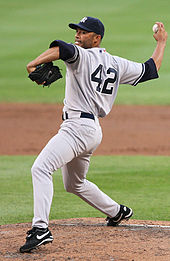
In baseball, a closing pitcher, more commonly referred to as a closer, is a relief pitcher who typically enters the game in the final inning. Ideally, the closer’s team will be leading on the scoreboard at that point, and so the closer’s job is to “close” the game, getting the final outs of that final inning.
A closer’s effectiveness has traditionally been measured by the number of saves he earns. A save is a statistic credited to a relief pitcher, as set forth in Rule 9.19 of the Official Rules of Major League Baseball. The rule states that the official scorer shall credit a pitcher with a save when that pitcher meets all four of the following conditions:
He is the finishing pitcher in a game won by his team;
He is not the winning pitcher;
He is credited with at least ⅓ of an inning pitched; and
He satisfies one of the following conditions:
He enters the game with a lead of no more than three runs and pitches for at least one inning
He enters the game, regardless of the count, with the potential tying run either on base, at bat or on deck
He pitches for at least three innings.
Over time, closers have become one-inning specialists typically brought in at the beginning of the ninth inning in save situations. They enter the game facing the high pressure that comes with having to seal those last three outs and, thus, a win for their club, which makes their role a rather essential one to a team’s success.
Mariano Rivera is MLB’s all-time leader in regular season saves with 652.
I don’t think it comes as a surprise that baseball involves the least amount of running of any of these. I am a bit surprised that a tennis match requires more running than a basketball game. It looks like the original data came from Runner’s World, though I suppose it would be unfair to include the distance of a marathon in this chart.
This infographic is clearly intended for current ballplayers, though even as a fan and spectator, this is some good information. I actually didn’t know “batter’s shoulder” was a thing, but now I’m going to wince every time I see a hitter stop his or her swing.
A bunt is a type of offensive play that involves tapping the ball into play. The batter squares around in the batter’s box, sliding their top hand farther up the bat, and using the barrel to “catch” the pitch as it comes in. The batter can manipulate the bunt to where the ball simply drops in front of the plate, or they can angle the bat in order to guide the bunted ball along the first or third base line.
A sacrifice bunt is a sort of bunt play in which the goal is to advance a runner who is already on base. The batter attempts to bunt in a manner that leaves the fielders no choice but to throw only the batter out, thus allowing the other runner to advance to the next base.
Some hitters, particularly those who are speedy runners, may attempt bunt for a hit. These bunts typically come in the form of a drag bunt, in which the batter begins running in the batter’s box at the same time as they bunt, to help them get a head start in the race for first base.
Squeeze bunts are employed when there is a runner on third base. A safety squeeze is when the runner starts towards home after he sees that the bunt has been successfully laid down. A suicide squeeze (probably my favorite play in all of baseball) is when the runner on third takes off towards home with the pitch, and it becomes imperative that the batter lay the bunt down in order to prevent the runner being tagged out.
Here’s a great diagram of the cross section of a baseball. If you’ve never taken apart a baseball, it’s a fascinating experience (not to mention long and sticky). Baseballs definitely have more interesting features to them than the inflated rubber you find in a lot of sports.
Verinno Sports
And here’s a photo of the outside of a ball during the various stages while it’s getting made.
I have a handful of friends whom I’ve converted into baseball fans just by talking about the game. Fortunately for me, they all already had some familiarity with how the game works, so it was really just a matter of conveying my excitement. However, I know there are some folks out there who are completely unfamiliar with baseball, and I was pretty happy to come across this video. I’ll have to keep it in my back pocket for the day I meet someone who might be interested, but doesn’t know anything about this wonderful pastime.